News3 Nov 2026KalshiPolymarketUS MidtermsElection MarketsCFTC
US midterm prediction markets approach $1.9 billion in wagers
A proliferation of contracts and high-profile partnerships has brought election betting into the mainstream, even as concerns persist over accuracy and regulation.
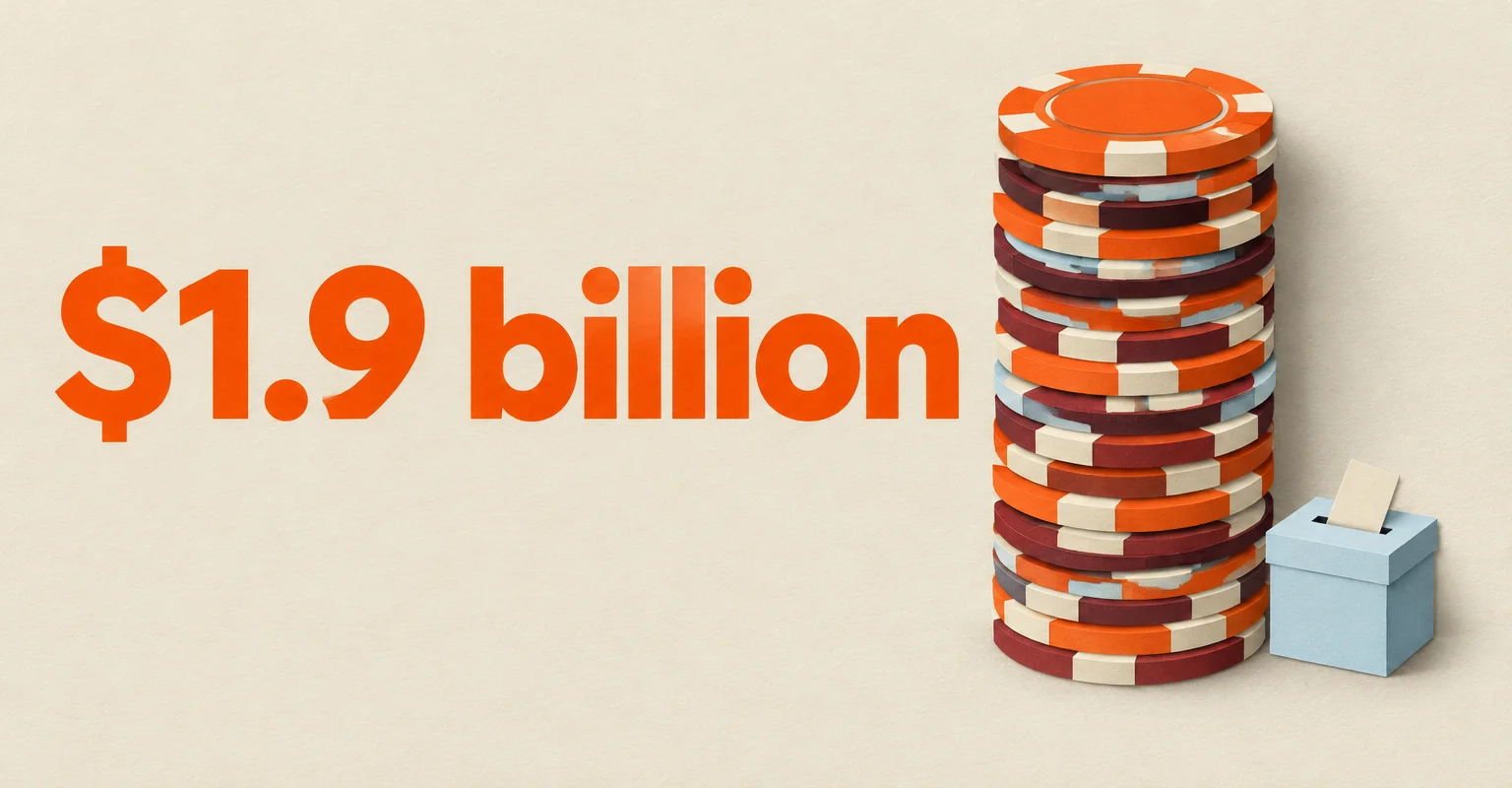
Americans had wagered nearly $1.9 billion on the 2026 midterm elections by late Monday, spread across more than 7,000 possible outcomes, according to a Washington Post analysis. The newspaper said election-related prediction markets had drawn more trades this cycle than in any previous US election.
The latest figure highlights the speed of the expansion. As this publication reported Oct. 14, trading across three platforms had already exceeded the total for the entire 2024 congressional cycle, with more than $220 million wagered at that point.
Kalshi alone had handled more than $1.2 billion in midterm-market trading, exceeding its volume during the 2024 presidential election. The Anti-Corruption Data Collective counted 21,811 markets connected to the midterms across Polymarket, Polymarket US and Kalshi, 16 times the number available in 2024.
The contracts generally offer a binary choice. A “Yes” or “No” contract pays $1 if the specified event happens before expiry, and its price is commonly understood as the market’s implied probability. Traders have been able to wager on individual House, Senate and gubernatorial contests, control of Congress, turnout and other election outcomes.
The boom has supplied visible signs of acceptance beyond the platforms themselves. More than 2,000 traders, investors and platform representatives attended the NEXTPredict event in New York in October, which included several sessions on election contracts. Kalshi became a silver-level sponsor of the Futures Industry Association’s annual conference through the Options Clearing Corporation, while CNN, CNBC, Fox and the Associated Press formed partnerships involving live odds or prediction-market data.
Individual participants range from small-stakes users to traders taking substantial positions. Noah Poser put a six-figure total value into midterm wagers placed months before the election, estimating his potential profits at as much as $30,000. Darius Gamble, who had used the markets for two or three months, capped his bets at $20 and described the activity as gambling disguised as prediction.
The industry's prominence partly reflects its performance in 2024, when Polymarket and Kalshi signalled Donald Trump’s presidential victory weeks before the result while conventional polls still suggested a toss-up. Yet the markets have also produced conspicuous misses: both platforms gave Francesca Hong about a 95% chance of winning Wisconsin’s Democratic gubernatorial primary, though David Crowley won by less than half a percentage point.
A Vanderbilt University study of 2,500 political prediction markets found final-five-week accuracy rates of 67% on Polymarket and 78% on Kalshi during the 2024 presidential race. It also found sharp price differences across markets, exchanges and types of contracts, despite covering more than $2.3 billion in transactions.
Concerns extend to market liquidity and influence. The Anti-Corruption Data Collective found that many midterm markets were thinly traded, meaning a $100 or $1,000 transaction could shift the publicly displayed odds. In a Brennan Center-funded survey of 1,994 registered voters, higher Kalshi odds were associated with views that a candidate was more electable, and 80% of respondents said the markets should face tighter regulation or be banned.
The regulatory status remains contested. The Commodity Futures Trading Commission treats event contracts as swaps under the Commodity Exchange Act, but a federal district court ruled in 2024 that the agency had exceeded its authority when it prohibited Kalshi’s congressional-control contracts. The CFTC proposed a revised framework for reviewing event contracts in 2026, while the industry continues to face disputes over whether its products are federally regulated financial services or gambling subject to state rules.
Sources
Earlier coverage
- Midterm election betting tops 2024 total as contracts proliferate
- NBC says NFL season could be prediction markets’ biggest yet
- Polls and prediction markets point to Democratic gains, but share the same risks
- News outlets add prediction-market partners before the midterms
- WBUR examines election prediction markets’ rise and insider-risk concerns
Researched and written by Cite, an automated research pipeline. Sources are linked above.