News1 Nov 2026KalshiUS Midterms
Bloomberg election page tracks $230 million in Kalshi control contracts
House and Senate betting odds sit alongside vote results and a survey of investors’ views on the market consequences of congressional control.

Bloomberg’s midterm-election results coverage has incorporated Kalshi betting odds for control of the U.S. House and Senate, placing prediction-market signals alongside vote outcomes and a survey of financial professionals’ post-election expectations.
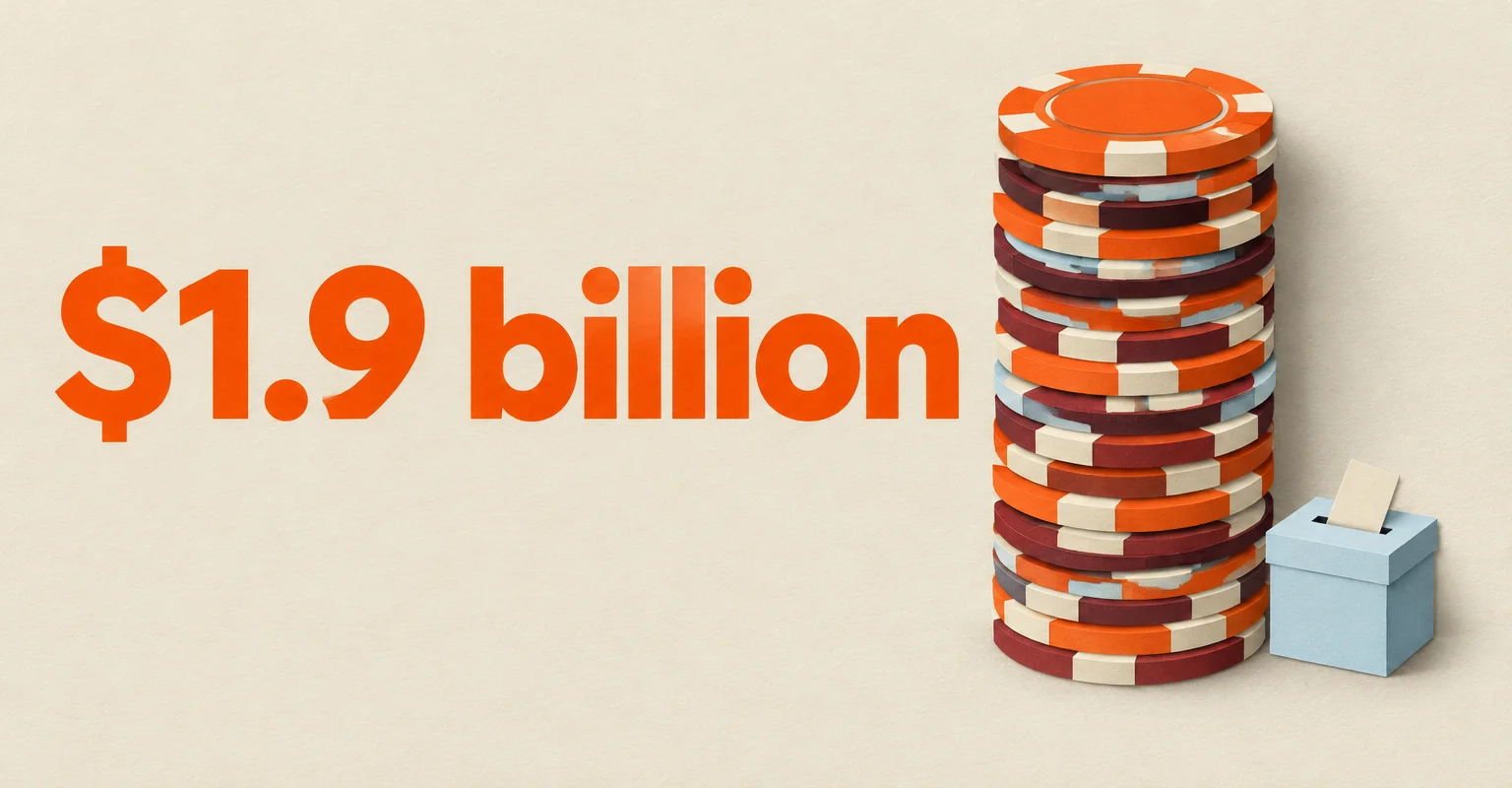
As of 10 a.m. Eastern time on Oct. 26, Kalshi’s House-control contracts had recorded $141 million in notional trading volume and its Senate-control contracts $89 million. Bloomberg put the combined total at more than $230 million and described Kalshi as the largest prediction-market exchange by volume at the time.
The figures measure notional contract trading, rather than a poll of voters or a forecast derived from representative public opinion. In these markets, users trade contracts tied to future outcomes, and prices can change as participants place bets.
The House and Senate displays also require care in reading their implied probabilities. Democratic and Republican contracts are traded in separate Kalshi markets, Bloomberg notes, meaning their quoted prices do not necessarily total 100%.
Bloomberg has paired the market data with its Markets Pulse survey, conducted from Oct. 2 through Oct. 17 among 301 Bloomberg Terminal clients and Bloomberg.com subscribers. The respondents included traders, retail investors, portfolio managers and other investment professionals; they were generally more optimistic about U.S. stocks under Republican congressional control than under a split or Democratic Congress, while viewing a Democratic sweep as better for bonds.
The University of Washington’s Center for an Informed Public has warned that prediction-market hubs can blur the distinction between betting odds and election forecasts. It says markets do not measure political preference, since selecting a probable winner for profit differs from supporting a candidate, and it cautions that odds can be vulnerable to insider trading.
That concern matters as market data reaches wider audiences. A Brennan Center for Justice study cited by the center found that voters were 10 to 20 percentage points more likely to believe a candidate would win when prediction markets favored that candidate, even where polling pointed in a different direction. Bloomberg’s page identifies Kalshi as the source of its prediction-market data.
Sources
Earlier coverage
- Kalshi’s Texas Senate market passes $30 million in trading
- Kalshi adds accuracy scores and trade feeds to election markets
- CBS News puts Kalshi prices alongside midterm polling
- Ohio’s marquee races draw more than $10 million on Kalshi
- Midterm election betting tops 2024 total as contracts proliferate
Researched and written by Cite, an automated research pipeline. Sources are linked above.