News19 Oct 2026FanaticsSports BettingKalshiPolymarket
Fanatics chief predicts $7 billion U.S. betting marketing battle
Michael Rubin says Kalshi and Polymarket have turned a former two-company race into a crowded, well-financed contest.
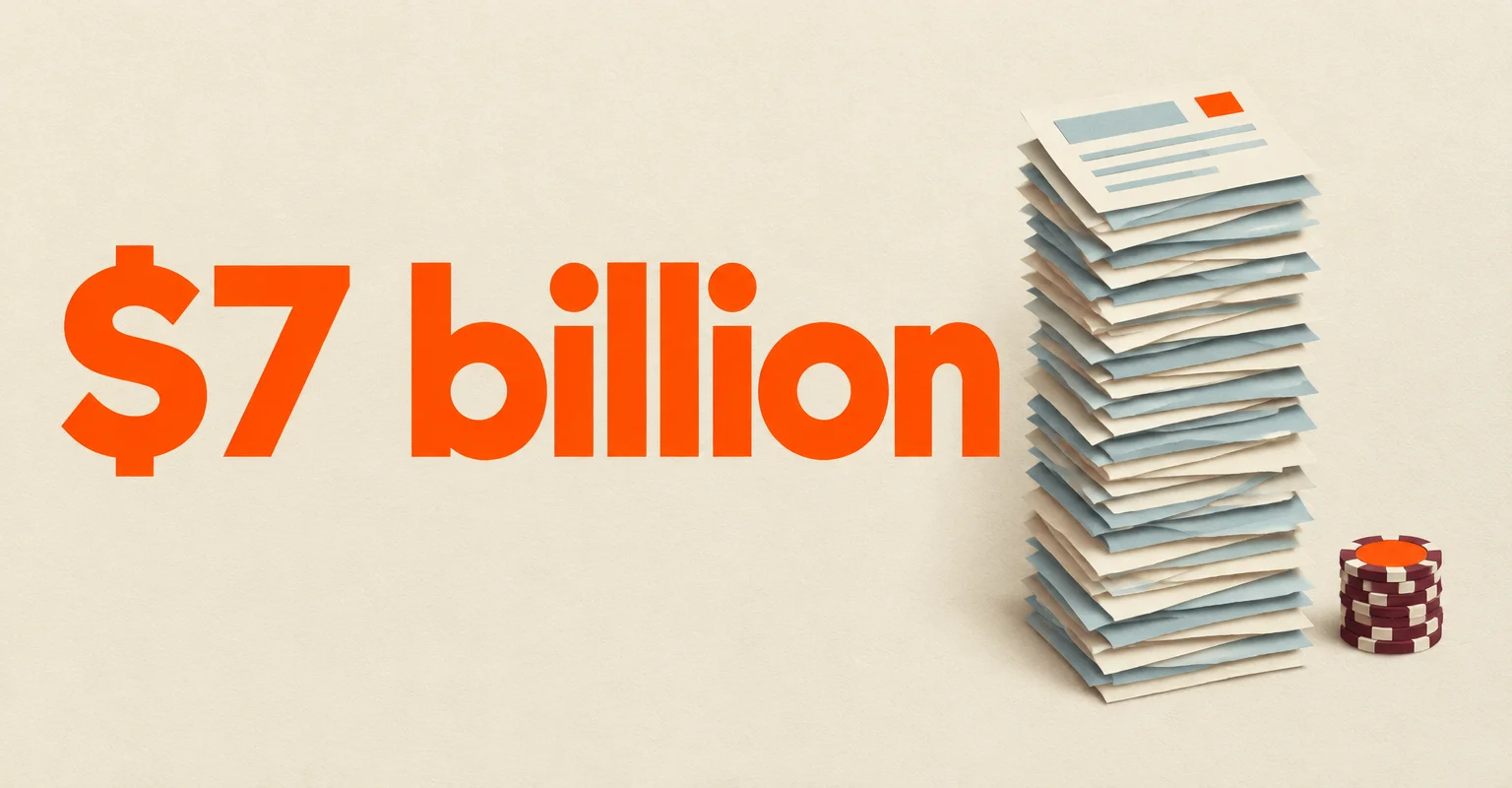
Fanatics chief executive Michael Rubin said U.S. betting and gaming marketing could more than double to about $7 billion in 2027, from roughly $3 billion in 2025, as sportsbooks and prediction-market operators compete for customers.
Rubin made the forecast in an Oct. 14 appearance on CNBC’s Squawk Box. He said the market had moved beyond a contest dominated by DraftKings and FanDuel into a five-way fight that also included Fanatics, Kalshi and Polymarket. “It will not be a fun next couple of years,” he said.
The estimate covers overall marketing spending across sportsbook operators. Rubin said he did not know how much consolidation the five principal competitors would see over the next several years because all were well financed. BetMGM and bet365 also remain competitors in the U.S. market.
Fanatics plans to lift its own betting and gaming marketing budget from about $350 million this year to as much as $1 billion in 2027. Rubin said profits from its merchandise and collectibles businesses gave it scope to invest more aggressively, with those businesses expected to generate more than $12.5 billion combined this year.
The company estimates it has nearly 10% of the U.S. sports-betting market. Its Sportsbook operates in 23 states and Washington, D.C., while Fanatics Markets offers federally regulated event contracts in several states and territories. As this publication reported in September, Fanatics had already put sports betting, casino games and prediction markets into a single Sports & Casino app.
The projected spending rise follows a sharp increase in promotion across the sector. Advertising by major sportsbooks and prediction markets rose 21% in the first seven months of 2026, according to Nielsen research reported by Axios. Flutter Entertainment expects additional investment in its U.S. sportsbook, including more generous promotions, to reduce its 2026 adjusted EBITDA by $270 million.
As we reported this month, prediction-market customer-acquisition spending had approached $200 per trader during the NFL season, close to the roughly $250 sportsbooks spend per customer. Eilers & Krejcik Gaming analyst Brad Allen said prediction-market operators were spending heavily on pay-per-click advertising, app-store placements and affiliate referrals.
Prediction markets have broadened their reach by offering sports-related contracts in states where conventional online sportsbooks cannot operate. That expansion remains legally contested: in September, Michigan’s attorney general obtained a preliminary injunction barring Kalshi from offering sports-event contracts in the state, with fines of $500,000 a day for violations.
Rubin said Fanatics would not permit customers under 21 to use its prediction-market products, unlike rivals that accept 18-year-olds. States have argued that sports-contract platforms circumvent sportsbook requirements on age verification, addiction safeguards and tax collection, while platforms including Kalshi and Polymarket describe their offerings as commodity-style contracts rather than gambling.
Sources
Earlier coverage
- Bloomberg video examines prediction markets’ challenge to sportsbooks
- Prediction markets push NFL customer spending close to sportsbook levels
- Fanatics folds prediction markets into Sports & Casino app
- NBC says NFL season could be prediction markets’ biggest yet
- Genius Sports says prediction-market demand will survive regulatory change
Researched and written by Cite, an automated research pipeline. Sources are linked above.