News27 Oct 2026North CarolinaKalshiPolymarketSenate
North Carolina election markets near $7 million as Cooper becomes a heavy favourite
The Senate contest accounts for more than $4.4 million in trading, while markets favour Democrats in five of the state’s 14 House races.
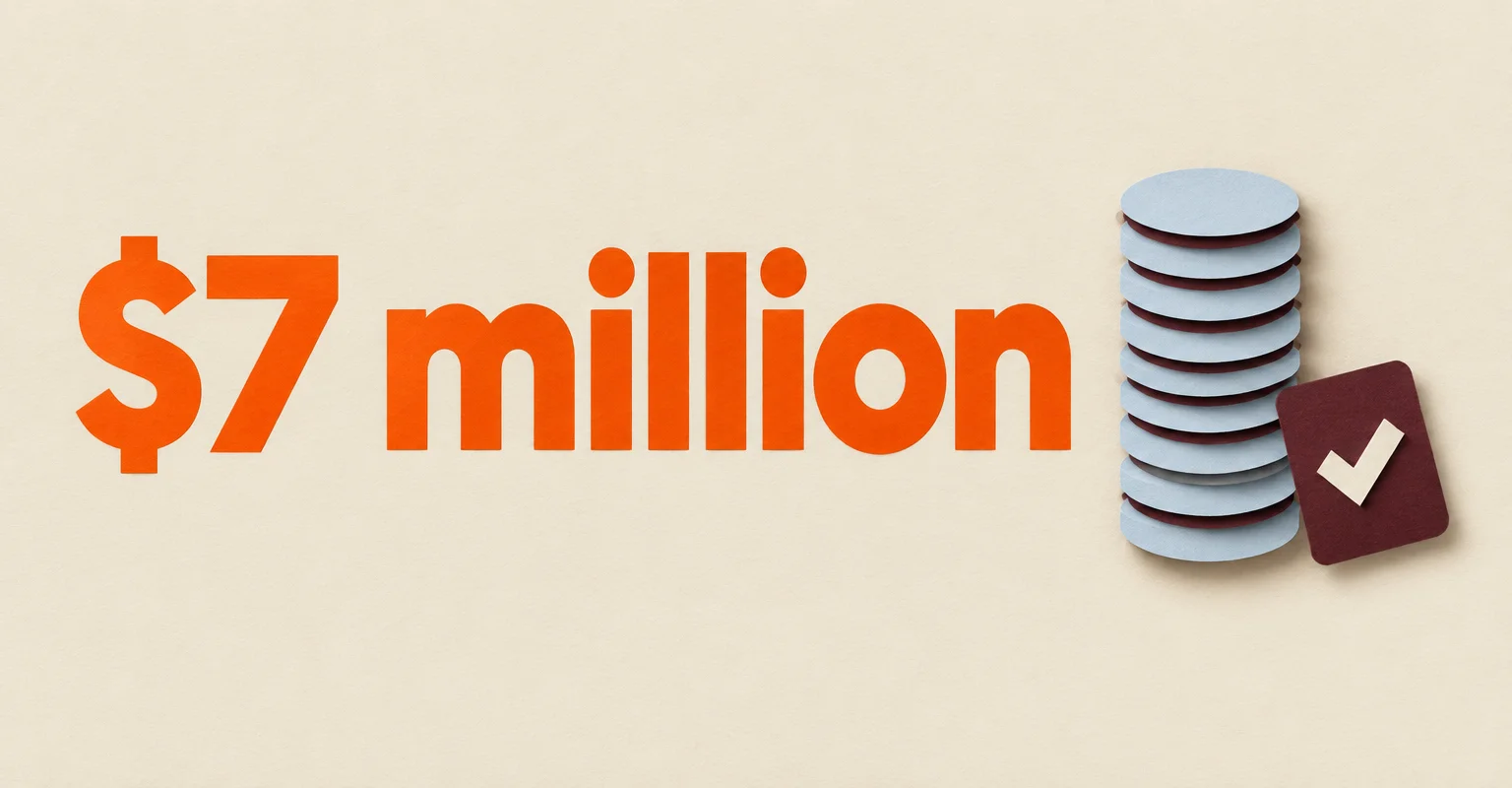
North Carolina’s U.S. Senate and House contests had attracted nearly $7 million in trading across Kalshi and Polymarket by Oct. 26, with the open Senate seat accounting for more than $4.4 million of that total.
Roy Cooper was the overwhelming favourite to defeat Michael Whatley for the seat being vacated by Republican Sen. Thom Tillis. The two platforms put Cooper’s average implied probability at 96.5%, while Kalshi alone showed a 97% probability for Cooper and 3% for Whatley.
The state-level activity adds to the expanding midterm election-contract trade that we reported earlier this month, when total congressional betting across major platforms had already exceeded the 2024-cycle total. A tracker of Kalshi markets recorded roughly $4.48 million in lifetime volume across 29 contracts tied to the North Carolina Senate race.
Market prices are snapshots of traders’ expectations rather than measures of voter preference. Elon University’s final survey found Cooper ahead by 13 points among likely voters, 52% to 39%, while a WRAL/WSOC poll put his lead at 14 points, 54% to 40%.
Elon polled 800 North Carolina adults from Sept. 29 through Oct. 8, with a margin of error of plus or minus 4.03 percentage points. Its forced-choice question gave Cooper an 11-point advantage, 54% to 43%. The WRAL/WSOC survey, conducted Oct. 7-11, included 643 people who had already voted by mail or said they were likely to vote, and reported a five-point credibility interval.
The House markets favoured Democrats in five of North Carolina’s 14 districts and Republicans in nine, a prospective division that would be more favourable to Democrats than the state’s current delegation, in which 10 of 14 representatives are Republicans. North Carolina voters elect all 14 House members on Nov. 3.
One of the House markets cited was in the 11th District, where more than $500,000 had been wagered on Jamie Ager and Jennifer Balkcom. Ager had an 86% combined Kalshi-and-Polymarket probability of victory. The 1st District contest between incumbent Don Davis and Laurie Buckhout had drawn more than $490,000, with Davis holding an average 81.5% chance of winning.
The contracts have also raised questions about participation and public perception. North Carolina law prohibits betting on elections, although Kalshi and Polymarket describe their contracts as federally regulated financial products. Kalshi says candidates and campaign staff may not trade relevant election markets; Buckhout was fined about $2,590 and suspended for three years after trading on her own race.
A Brennan Center-funded nationwide study found that favourable betting odds made respondents 10 to 20 percentage points more likely to believe a hypothetical candidate would win, but did not establish either market manipulation or an effect on voting. In that survey, only 19% of respondents called prediction markets accurate, compared with 37% for traditional polls.
Sources
Earlier coverage
Researched and written by Cite, an automated research pipeline. Sources are linked above.