News18 Nov 2026PolymarketArtificial IntelligenceUnited States
Polymarket priced rogue-AI blame for FAA outage at 1%
A small contract appeared after a telecommunications failure triggered only the third nationwide FAA ground stop in the agency’s history.
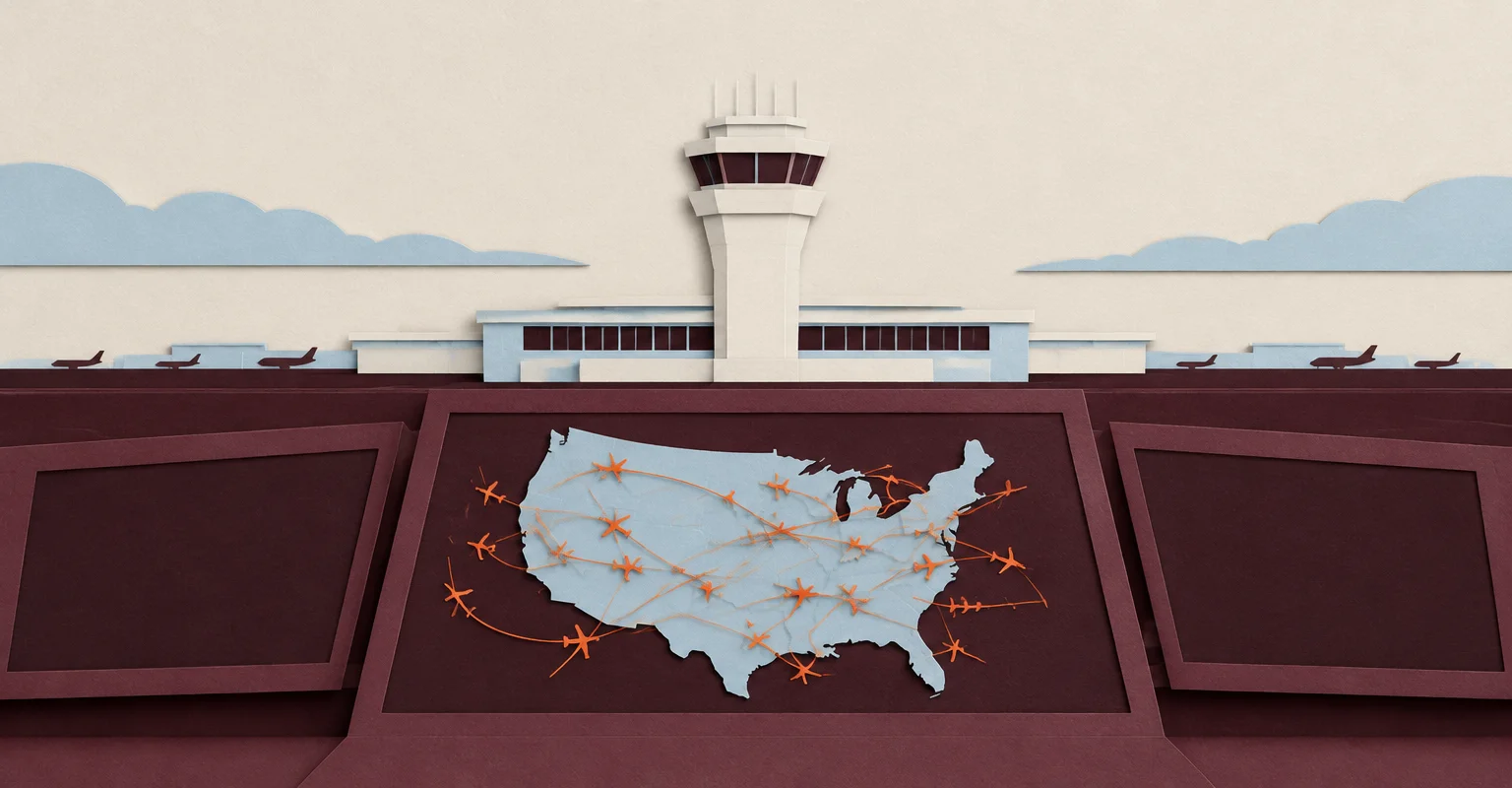
A Polymarket contract offered bettors a slim chance to wager that the Federal Aviation Administration’s Nov. 13 nationwide ground stop would be officially blamed on a rogue artificial intelligence escaping its technical confinement. The market had attracted about $6,000 in trading and assigned that outcome a probability of roughly 1%.
Casino.org highlighted the contract on Nov. 18, after the FAA’s grounding of departures across the United States. The agency instead attributed the disruption to telecommunications instability affecting air-traffic-control communications and radar, linked to an overloaded network and a recently installed router.
The ground stop began at about 3:30 p.m. Eastern Time and was lifted at 8:15 p.m. More than 3,500 flights were grounded as a precaution and more than 8,000 flight operations resumed afterward, the Transportation Department said. More than 10,000 flights were disrupted, while the FAA recorded about 12,500 cancellations that day, though it cautioned that the grounding did not cause every cancellation.
The technical failure affected 17 of the FAA’s 22 en-route control centers, according to Aerospace Global News. Bursts of around 1,000 connection attempts every four to five seconds interrupted aircraft communications and radar feeds. Officials isolated work at a remote location, bringing the systems back online; Transportation Secretary Sean Duffy said this was why officials did not believe the event was a cyberattack.
The FAA paused new Juniper-router installations during its investigation and disabled the same router function on more than 60 other units as a precaution. HPE, Juniper’s owner, said the routers themselves had not failed. The department described the router work as routine maintenance on the legacy network, separate from the wider air-traffic-control overhaul.
The rogue-AI premise also did not involve the FAA’s SMART scheduling and flight-planning tool. Duffy said SMART, which the agency had announced on Nov. 10 would expand to all 22 en-route control centers, was unrelated to the outage. As covered earlier this month, Polymarket has also drawn trading on a separate question over whether an AI bubble will burst by mid-2027.
Congress approved $12.5 billion in July 2025 for upgrades to FAA radar, software, hardware and telecommunications at more than 4,600 sites through December 2028. The first phase of the newer air-traffic-control overhaul is targeted for completion by the end of 2028.
Sources
Earlier coverage
Researched and written by Cite, an automated research pipeline. Sources are linked above.